
Introduction
Executive leaders face increasingly complex challenges in today's fast-paced business environment. Whether making decisions about growth strategies, resource allocation, market expansion, customer engagement, or operational efficiency, executives are expected to make accurate decisions quickly and confidently. At the same time, they must navigate economic uncertainty, changing customer expectations, technological disruption, and intense competition.
The growing volume of business data presents both opportunities and challenges. While executives have access to more information than ever before, transforming that data into actionable insights can be difficult. This is where decision intelligence has emerged as a powerful solution.
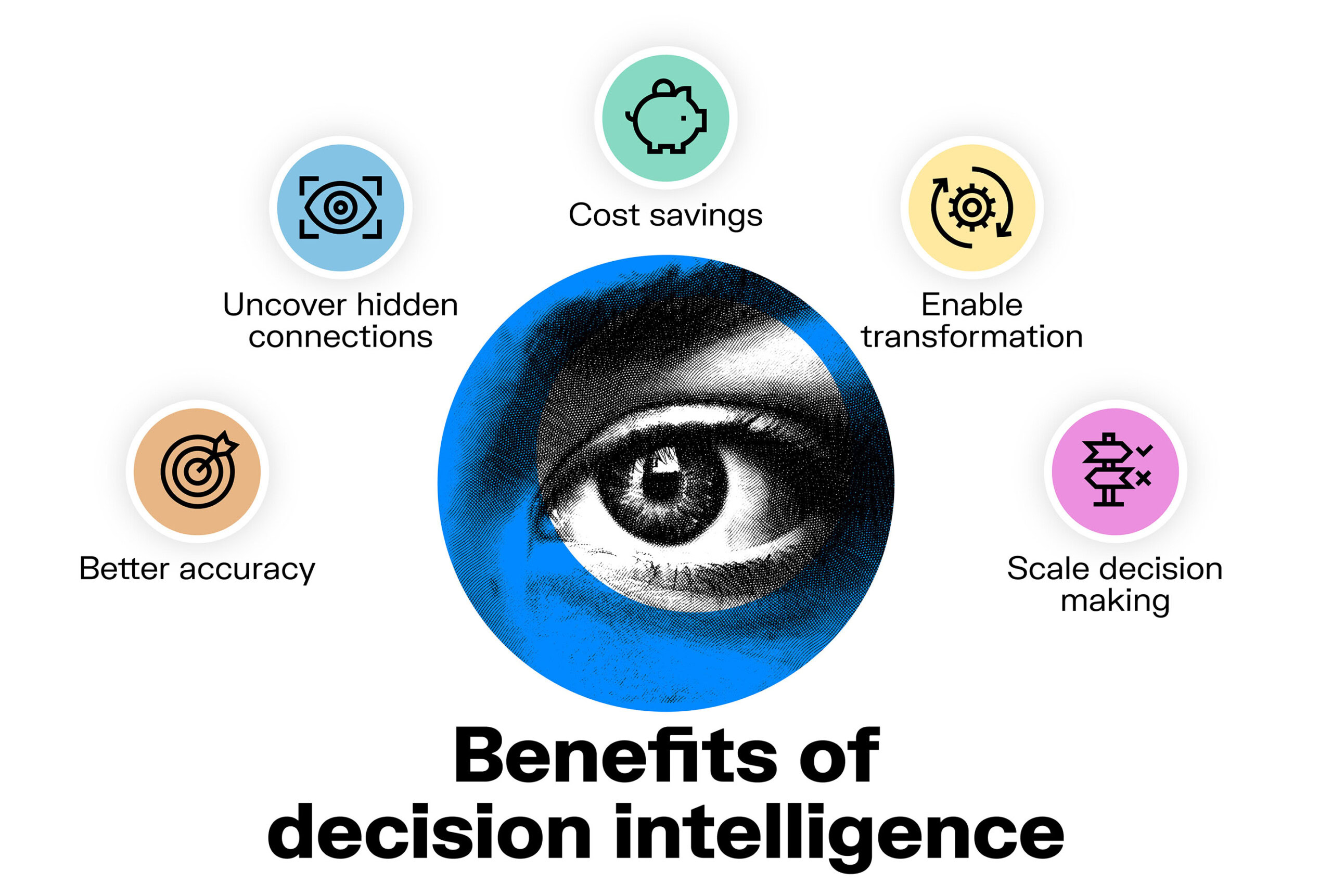
Decision intelligence combines data analytics, artificial intelligence (AI), machine learning, and business expertise to improve the quality and speed of decision-making. By helping executives understand risks, evaluate opportunities, and predict future outcomes, decision intelligence supports more informed leadership decisions.
Organizations are increasingly adopting platforms such as A2go.ai to strengthen executive decision-making and improve business performance through intelligent, data-driven insights.
Understanding Decision Intelligence
Decision intelligence is a multidisciplinary approach designed to enhance decision-making by integrating data, analytics, AI, and decision science. Unlike traditional business reporting systems that focus on describing past events, decision intelligence helps organizations determine the best course of action for future success.
The primary purpose of decision intelligence is to transform raw data into actionable recommendations that support strategic and operational decisions. It helps executives understand how different choices may impact business outcomes and enables them to make decisions based on evidence rather than assumptions.
By combining advanced technologies with human expertise, decision intelligence creates a structured framework for making smarter business decisions.
Why Executive Decision-Making Is Becoming More Complex
The role of executives has evolved significantly over the past decade. Modern business leaders must manage a growing number of variables while making decisions that impact the entire organization.
Some of the challenges executives face include:
- Rapid technological change
- Economic uncertainty
- Global competition
- Shifting customer behaviors
- Regulatory requirements
- Workforce management challenges
- Supply chain disruptions
These factors create a highly dynamic business environment where traditional decision-making approaches may not be sufficient.
Decision intelligence provides executives with deeper visibility into business conditions and future possibilities, helping them navigate complexity more effectively.
Enhancing Data-Driven Leadership
One of the greatest benefits of decision intelligence is its ability to support data-driven leadership.
Many organizations collect vast amounts of data from:
- Customer interactions
- Financial systems
- Marketing campaigns
- Operational processes
- Sales activities
- Supply chain operations
However, raw data alone does not automatically lead to better decisions.
Decision intelligence analyzes information from multiple sources and converts it into meaningful insights that executives can use to guide strategy and operations.
Solutions like A2go.ai help leaders transform data into actionable intelligence, enabling more informed and confident decision-making.
Improving Strategic Planning
Strategic planning is one of the most important responsibilities of executive leadership.
Executives must determine organizational goals, identify growth opportunities, allocate resources, and prepare for future challenges.
Decision intelligence enhances strategic planning by providing:
Predictive Insights
AI-powered analytics help forecast market trends, customer demand, and business performance.
Scenario Analysis
Executives can evaluate multiple scenarios and understand the potential outcomes of different decisions before taking action.
Risk Assessment
Decision intelligence identifies potential risks that could affect strategic initiatives and provides recommendations for mitigation.
These capabilities help leaders develop more effective and resilient business strategies.
Accelerating Decision-Making
In today's competitive environment, speed is often a critical factor in success.
Executives frequently face situations where delayed decisions can result in missed opportunities or increased risks.
Decision intelligence accelerates decision-making by:
- Automating data analysis
- Delivering real-time insights
- Identifying key trends
- Highlighting critical risks
- Providing actionable recommendations
Rather than spending valuable time manually reviewing reports, executives can focus on evaluating strategic options and taking action.
This improved efficiency supports faster organizational responses to changing market conditions.
Enhancing Forecasting Accuracy
Accurate forecasting is essential for effective executive decision-making.
Organizations rely on forecasts for:
- Revenue planning
- Budget development
- Workforce management
- Market expansion
- Investment decisions
- Resource allocation
Traditional forecasting methods often depend heavily on historical data and assumptions.
Decision intelligence improves forecasting by incorporating machine learning algorithms that analyze both historical and real-time information.
As a result, executives gain access to more accurate predictions that support better planning and resource management.
Platforms such as A2go.ai help organizations strengthen forecasting capabilities through advanced analytics and AI-driven insights.
Strengthening Risk Management
Risk management is a core responsibility for executive leaders.
Every major business decision involves some level of uncertainty, and executives must evaluate potential risks before committing resources.
Decision intelligence enhances risk management by:
- Identifying emerging threats
- Monitoring risk indicators
- Evaluating possible outcomes
- Simulating business scenarios
- Recommending mitigation strategies
By providing greater visibility into risks, decision intelligence enables executives to make more informed decisions while reducing uncertainty.
This proactive approach strengthens organizational resilience and protects long-term business performance.
Improving Resource Allocation
Efficient resource allocation is critical for maximizing organizational performance.
Executives must determine how to allocate budgets, personnel, technology investments, and operational resources.
Decision intelligence helps leaders optimize resource allocation by analyzing:
- Business priorities
- Performance metrics
- Market opportunities
- Operational constraints
- Financial projections
These insights ensure that resources are directed toward initiatives with the highest potential value.
Improved resource allocation often leads to increased productivity, profitability, and strategic success.
Supporting Better Customer-Centric Decisions
Customer expectations continue to evolve, making customer experience a key driver of business success.
Executives must make decisions that improve customer satisfaction while supporting growth objectives.
Decision intelligence provides valuable insights into:
- Customer behavior
- Purchase patterns
- Customer preferences
- Retention risks
- Service performance
By understanding customer needs more clearly, executives can make strategic decisions that strengthen customer relationships and improve business outcomes.
Organizations using A2go.ai can leverage customer-focused decision intelligence to create more effective engagement strategies and drive long-term loyalty.
Reducing Bias in Executive Decisions
Human judgment remains essential in leadership, but it is not immune to bias.
Executives may be influenced by personal experiences, assumptions, incomplete information, or cognitive shortcuts.
Decision intelligence helps reduce bias by introducing objective, data-driven analysis into the decision-making process.
Benefits include:
- Greater consistency
- Improved transparency
- Better accountability
- More balanced evaluations
- Stronger decision quality
By combining human expertise with evidence-based insights, organizations achieve more reliable outcomes.
Enabling Real-Time Decision Support
Modern businesses operate in environments where conditions can change rapidly.
Executives often need access to information in real time to respond effectively.
Decision intelligence systems continuously monitor business performance and provide immediate insights into:
- Market conditions
- Customer activity
- Operational performance
- Financial metrics
- Emerging risks
This real-time visibility enables leaders to make timely decisions that keep the organization agile and competitive.
Driving Organizational Alignment
Large organizations often struggle to align decisions across departments and business units.
Decision intelligence creates a shared framework for evaluating information and making decisions.
This alignment helps ensure that:
- Teams work toward common goals
- Resources support strategic priorities
- Performance metrics remain consistent
- Decision-making becomes more transparent
Greater organizational alignment improves execution and increases the likelihood of achieving business objectives.
The Future of Executive Decision-Making
As artificial intelligence and advanced analytics continue to evolve, decision intelligence will play an increasingly important role in executive leadership.
Future developments may include:
- More advanced predictive modeling
- Real-time automated insights
- Enhanced scenario planning
- Intelligent decision recommendations
- Greater integration across enterprise systems
Organizations that embrace decision intelligence today will be better positioned to adapt to future challenges and opportunities.
Conclusion
Executive leaders operate in an increasingly complex and data-rich environment where making the right decisions can determine organizational success. Decision intelligence provides a powerful framework for improving executive decision-making by combining data analytics, artificial intelligence, machine learning, and human expertise.
From strategic planning and forecasting to risk management and customer engagement, decision intelligence helps executives make smarter, faster, and more informed decisions. Platforms such as A2go.ai empower organizations to transform data into actionable insights that support leadership effectiveness and long-term growth.
As businesses continue to evolve, decision intelligence will become an essential tool for executives seeking to improve performance, reduce uncertainty, and maintain a competitive advantage in a rapidly changing world.